Bedtime Routines That Actually Help Little Ones Settle
Bedtime can feel like a hostage negotiation. Why a simple, predictable routine helps, what a good one looks like, how to handle 'one more story', and a safe-sleep reminder for babies.
By Alexander Rahman · · 5 min read
If you've ever spent an evening trying to get a small child to sleep, you'll know that bedtime can feel less like a routine and more like a hostage negotiation. One more story. One more drink of water. One more cuddle. One more trip to the toilet, which they did not need ten minutes ago and absolutely need now.
A good bedtime routine won't fix every night. Nothing does. But a simple, predictable routine can make bedtime calmer and easier for most families. Here's why routines help, what a good one looks like, and how to keep it from turning into a two-hour production.
Why routines help
Young children feel safest when they know what's coming next. A bedtime routine — the same few steps, in the same order, every night — becomes a signal to their body and brain that sleep is on its way.
Research on young children's sleep has found that a consistent bedtime routine is associated with better sleep, including falling asleep more easily and waking less in the night. It's not magic. It's predictability. And predictability is soothing, for children and, honestly, for exhausted adults too.
What a good routine looks like
There's no single right routine. But good ones tend to share a few features:
- They're short. Twenty to forty minutes is plenty for most families. Longer than that and it becomes hard to keep up.
- They're simple. A few steps, done the same way.
- They move from active to calm. Busy, bright, noisy things earlier; quiet, dim, gentle things at the end.
- They end in the same place. Usually the child's own bed or crib.
A common pattern looks like this:
- Bath or wash. A warm bath relaxes many children (though it doesn't need to be every night).
- Pyjamas and teeth. Once teeth arrive, brushing becomes part of bedtime.
- A quiet activity. A story or two, in a dim room.
- A song or lullaby.
- Cuddle, goodnight, lights out.
That's it. Bath, teeth, book, song, bed. Some families call it the "four Bs" (bath, brush, book, bed). Use whatever works for you.
Dim the lights, lose the screens
Light matters for sleep. Our body clocks are strongly affected by light and dark, and bright light in the evening can make it harder to wind down.
Try lowering the lights in the hour or so before bed. Keep screens — TV, tablets, phones — off during the routine. Many pediatric organizations recommend avoiding screens in the hour before bedtime for young children. A dim room and a quiet voice do more to help than any gadget.
Read every night
Reading together is one of the best parts of any bedtime routine. It's calming, it's close, and it's wonderful for language — even for babies too young to understand the words. Hearing your voice, at a slow and gentle pace, is soothing all on its own.
Don't worry if your child wants the same book every night for three months. Repetition is part of how little children learn, and a familiar story can become a powerful sleep signal. (You may grow to dislike the book. They will love it more each time. That's the deal.)
Handle "one more" with kindness and limits
"One more story" is the oldest negotiation in the world. It helps to decide the rules in advance — say, two stories — and stick to them warmly but firmly. "Two stories, then song, then bed." Children push against limits partly to check they're still there. Calm, consistent limits are reassuring, even when they're protested.
And on the nights you give in? That's fine too. Nobody's keeping score.
Say goodnight to things
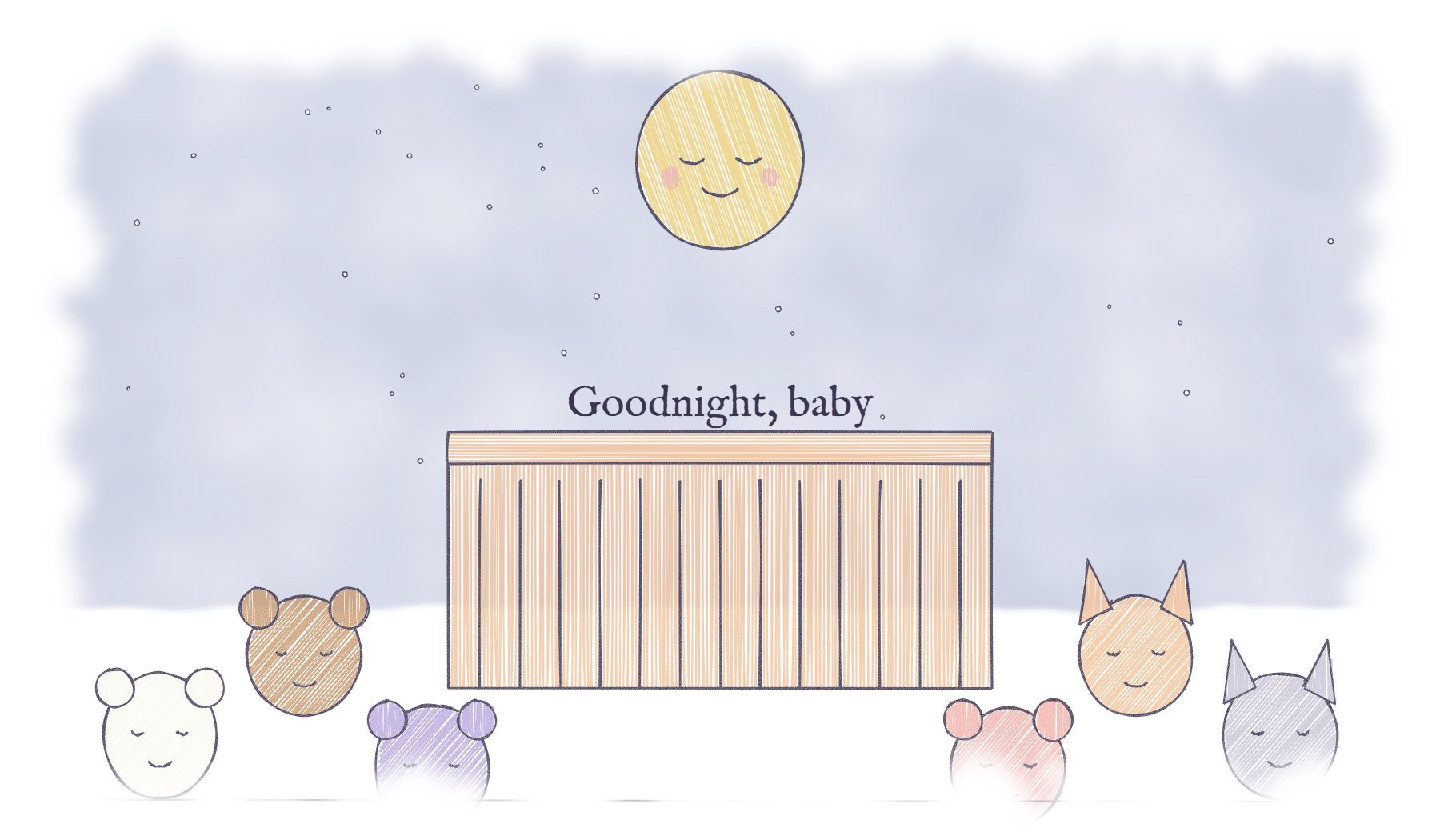
Many toddlers love saying goodnight to the things around them — toys, the moon, the window, the dog. It's a gentle way of letting go of the day. Lots of classic bedtime books are built around exactly this idea, and children often start doing it on their own.
Some honest truths
- Some nights will be a disaster anyway. Illness, teething, growth spurts, big changes and plain bad luck will all disrupt sleep sometimes. A routine makes good nights more likely; it doesn't guarantee them.
- Consistency matters more than perfection. A simple routine done most nights is better than an elaborate one you can't keep up.
- It takes time. If you're starting a new routine, give it a couple of weeks before deciding whether it works.
- Your calm is contagious. Children pick up on our mood. If you can slow down yourself — even if you're secretly counting the minutes — they'll usually slow down too.
Safe sleep reminder for babies
For babies, always follow safe sleep guidance: place them on their back to sleep, on a firm, flat surface, in their own crib or bassinet, with no pillows, blankets, bumpers or soft toys. Room-sharing (but not bed-sharing) is recommended for at least the first six months. The cozy blankets and teddies in bedtime stories belong to storybook bedtime, and to older children.
When to ask for help
Talk to your pediatrician if:
- your child snores loudly and regularly, or seems to struggle to breathe while sleeping,
- sleep problems are severe and persistent and affecting the whole family,
- or you're worried for any reason.
And if you are struggling — exhausted, low, or finding it hard to cope — please tell someone. Broken sleep is genuinely hard, and asking for support is a sensible thing to do, not a failure.
The best part of the day
Bedtime can be the most stressful part of the day. It can also be the best. The bath splashes, the story voices, the small warm weight leaning on you as their eyes get heavy. A good routine is partly about sleep — and partly about making sure that, at the end of every day, there's a little bit of time that's just for the two of you.
If you're looking for stories made for exactly this moment, Goodnight, Little Moon is twelve short, gentle bedtime stories and a lullaby, written to be read aloud slowly as the lights go down.
This article is general information, not medical advice. If you're concerned about your child's sleep or health, talk to your pediatrician.
- #babies
- #toddlers
- #sleep
- #bedtime