Liminal Spaces: Why Empty Malls and Night-Time Corridors Feel So Wrong
An empty school in summer. A parking lot at 2 a.m. A hotel hallway that goes on a bit too long. What liminal spaces are, why they unsettle us, where the Backrooms came from, and why horror writers love them.
By Alexander Rahman · · 5 min read
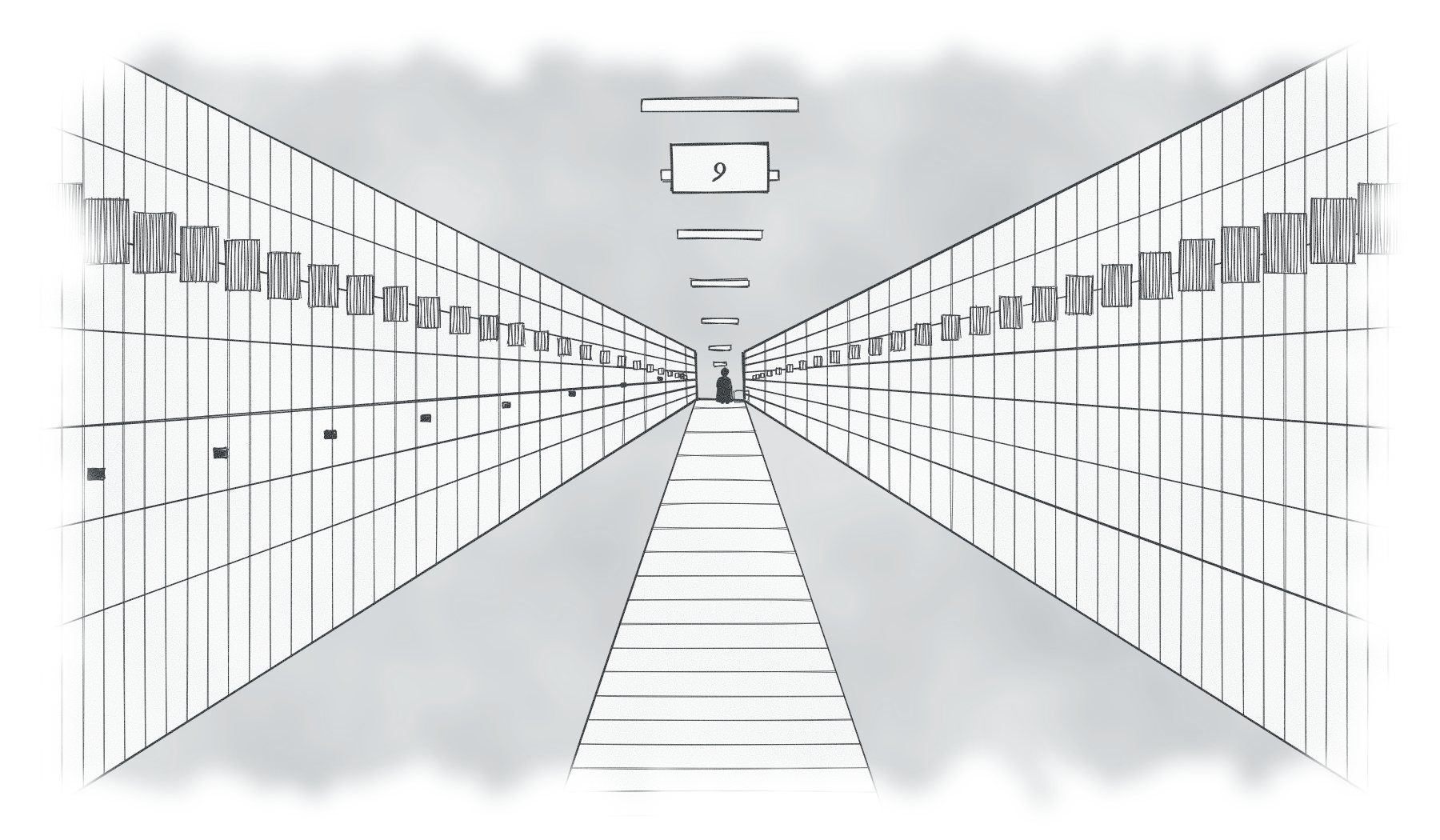
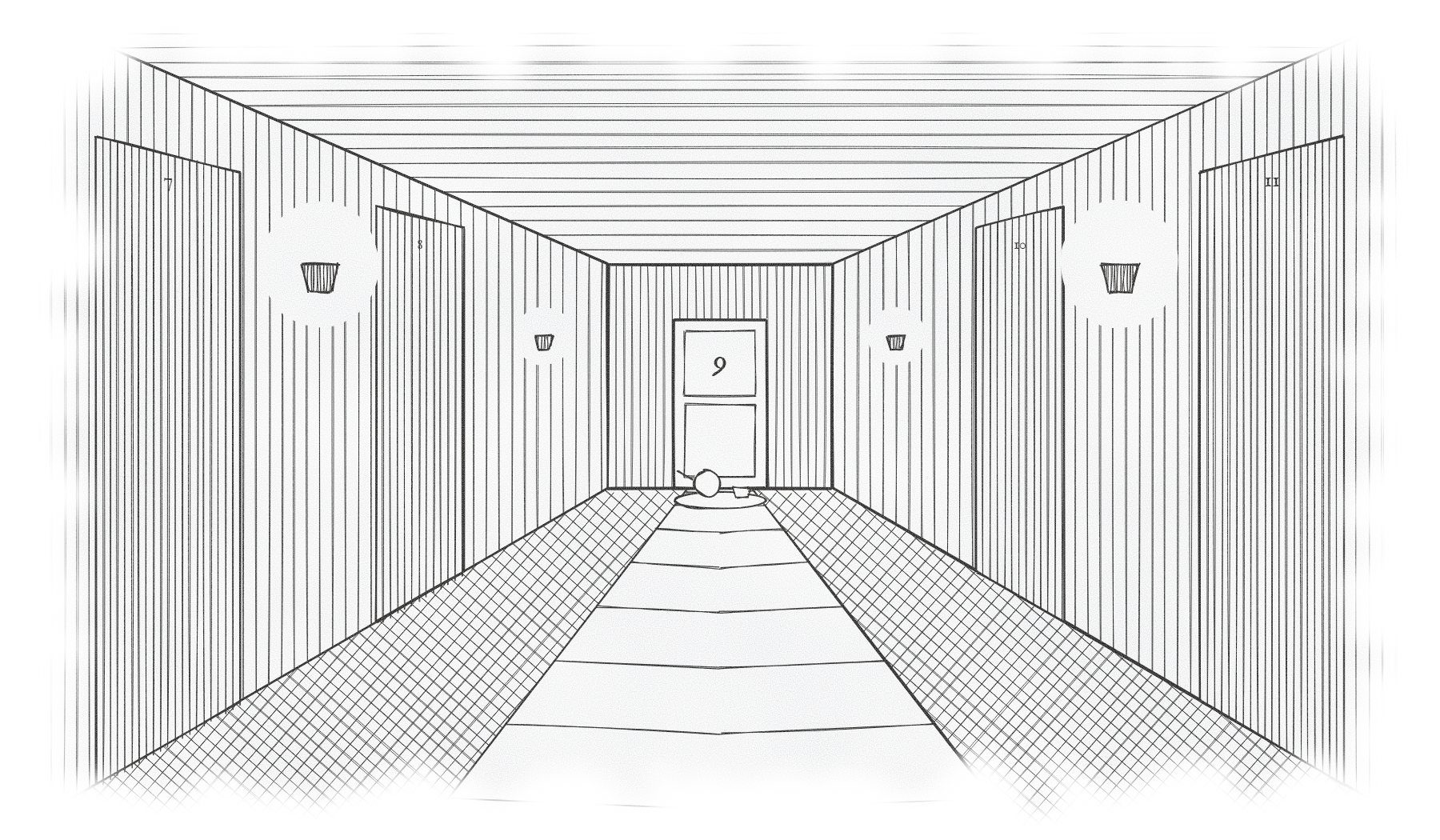
You've probably felt it. A school corridor during the summer holidays. An empty parking lot at 2 a.m. under orange lights. A hotel hallway that goes on a bit too long. A shopping mall half an hour before it opens, all the shutters down, music still playing to nobody.
Nothing's wrong, exactly. Nothing's happening at all. And yet something feels off. Quiet in the wrong way. Like the place is waiting for something — or like you're not supposed to be there.
There's a name for these places now, and an enormous online fandom around them. They're called liminal spaces. Here's what that means, why they get under our skin, and why horror writers love them so much.
Where the word comes from
"Liminal" comes from the Latin limen, meaning threshold. In anthropology, the word has a long history: the scholar Arnold van Gennep wrote about rites of passage in the early twentieth century, and Victor Turner later built on that idea, describing the "liminal" stage as the in-between phase — when you've left one state but haven't arrived at the next. Not a child anymore, not quite an adult. Not single, not yet married.
The internet borrowed the word and applied it to places. A liminal space, in the online sense, is somewhere designed for passing through — corridors, stairwells, waiting rooms, airports, parking lots, highway rest stops — especially when it's empty or seen at the wrong time.
Why do they feel so strange?
Nobody has a definitive scientific answer to this, and I want to be honest about that: a lot of what's written online is people describing a feeling rather than explaining it. But there are a few ideas that I think hold up well.
They're out of context. Places like schools and malls are meant to be full of people and noise. When you see them empty, your brain notices the mismatch. It expects crowds and gets silence. That gap between what you expect and what you see is uncomfortable, even if you can't say why.
They're built to be forgettable. Transitional spaces are often deliberately bland — beige carpet, strip lights, identical doors. They're not designed to be looked at; they're designed to be walked through. When you stop and actually look, the sameness can feel eerie. Every door could be any door.
They're slightly familiar. A lot of liminal-space images look like somewhere you might have been. A swimming pool from a childhood holiday. A play area in a fast-food restaurant. That half-recognition can trigger nostalgia and unease at the same time, which is a very strange combination.
Nobody's there to tell you it's OK. Humans are social animals. We read safety partly from other people. An empty space gives you no cues — no one to watch, no one to copy. You're left on your own to decide whether it's safe, and some old part of your brain isn't sure.
The Backrooms
You can't talk about liminal spaces online without mentioning the Backrooms. The idea began with an image posted on the internet forum 4chan in 2019 — a photograph of an empty, yellowish room with old carpet and fluorescent lights — and a comment describing a place you could "noclip" into out of reality: an endless maze of identical rooms, humming lights, damp carpet, and the feeling that something else is in there with you.
It spread enormously. People wrote stories, made videos, built games. A whole collaborative mythology grew up around it. What's interesting is that the original image isn't frightening at all. It's just an empty office. The horror comes entirely from the idea of it going on forever.
That, I think, is the key to why liminal spaces work so well in fiction.
Why horror loves them
A haunted castle tells you it's scary. A liminal space doesn't tell you anything. It lets you scare yourself.
Writers have used this for a long time, long before the internet named it. Stephen King's The Shining puts its horror in an empty hotel out of season. Countless ghost stories use deserted railway stations, night shifts, closed-up buildings. The emptiness does half the work.
There's also something about these places that fits horror's favorite trick: the familiar made strange. A supermarket aisle is the most ordinary place in the world. A supermarket aisle at 3 a.m., with nobody in it, that goes on slightly further than it should? That's a story.
Is it just the internet being dramatic?
Partly, maybe. Some of the liminal-space craze is aesthetic — people enjoy the moody photographs the way they'd enjoy a melancholy song. Not everyone who shares them feels genuinely uneasy.
But I don't think the feeling is invented. Plenty of people describe the same sensation without ever having heard the term: the odd hush of a school after hours, the eeriness of a hospital corridor at night, the way an empty theater seems to be holding its breath. The internet didn't create the feeling. It just gave it a name and a meeting place.
Seeing them for yourself
If you want to notice liminal spaces in real life, you don't have to go anywhere special. Try:
- A parking lot late at night, under sodium lights.
- A shopping center just before opening or just after closing.
- A hotel corridor at 4 a.m.
- A swimming pool or leisure center when it's empty.
- Highway rest stops in the small hours.
- Your own workplace on a public holiday.
Stand still for a moment. Listen. Notice how loud the hum of the lights is. You'll see what people mean. (And then, sensibly, you'll go home.)
The appeal, really
I think we're drawn to these places for the same reason we're drawn to scary stories in general. They let us feel a little unease in a safe way. Nothing happens. Nothing will happen. But for a moment, the ordinary world looks slightly off, and our brains light up trying to work out why.
That's a very particular kind of pleasure. A bit lonely. A bit nostalgic. A bit frightened. And very, very human.
If you like stories set in exactly these kinds of places — empty supermarkets, parking lots, toll booths and laundromats after midnight — The Night Shift Files was written for you.
- #horror
- #liminal spaces
- #internet culture
- #psychology