Why Do Babies Laugh? What to Know About Those First Giggles
When babies usually start laughing, what makes them giggle, why a laugh means they've learned something, why fun can tip into tears so fast, and the games most likely to get a belly laugh.
By Alexander Rahman · · 5 min read
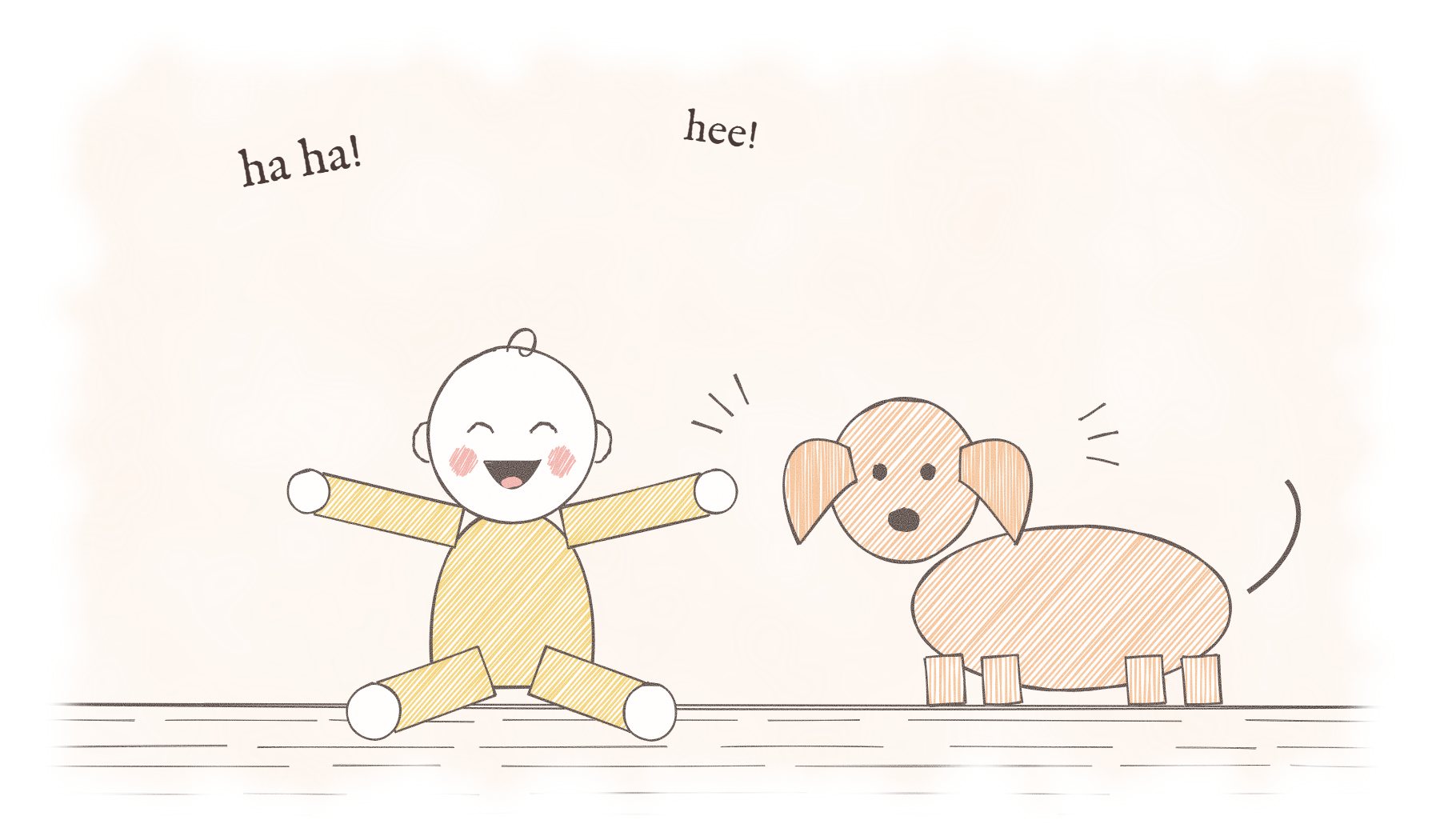
There are very few sounds in the world as good as a baby's first proper laugh. It usually arrives out of nowhere — you sneeze, or the dog shakes its ears, or you pull a sweater over their head — and out comes this squeaky, gurgly, astonished noise. And from that moment on, you're a comedian. A desperate one. Performing for an audience of one very tough critic.
So what's actually going on when a baby laughs? Why do they find some things hilarious and others completely unfunny? And when should you expect it? Here's what we know.
When does it start?
Most babies laugh for the first time somewhere around three to four months old, a few weeks after their first social smiles. But — and this is important — there's a lot of variation. Some babies laugh a bit earlier. Some are more serious little people who take their time. Both are normal.
Before that, you'll probably see smiles. Very early "reflex" smiles, often in sleep, happen in the first weeks and aren't really in response to anything. The first true social smile — the one where your baby looks at your face and smiles at you — usually comes somewhere around six to eight weeks. Laughter tends to build from there.
What do babies laugh at?
Early laughter is mostly physical. Babies tend to laugh first at:
- Tickles and tummy kisses (especially raspberries blown on a tummy)
- Gentle bouncing and movement
- Funny noises — popping lips, animal sounds, exaggerated sneezes
As the months go on, their humor gets more sophisticated. They start laughing at things they see and expect: peekaboo, a toy popping up, a parent pretending to sneeze and then not sneezing. By the end of the first year, many babies laugh at things that are simply absurd — a sock on your hand, a bowl on someone's head.
That shift tells you something lovely about what's going on in their heads.
Laughter means they've learned something
To find something surprising, you first have to know what's supposed to happen. A baby can't be delighted by a broken pattern until they've learned the pattern.
So when your baby starts laughing at peekaboo, it's a sign they've begun to expect that your face will come back. When they laugh at a sock on your hand, it's because they know very well where socks belong. Every laugh is, in a way, a little report on what they've figured out about the world.
I think that's one of the nicest facts about babies. Their jokes are evidence of learning.
Laughter is social
Researchers who study laughter have noticed that people laugh far more often with others than alone. Babies are the same: their laughter is mostly aimed at people, especially the people they love.
A baby's laugh is partly a message: this is great, keep going. It rewards you for playing — and, conveniently, it makes you want to keep doing the silly faces, voices and games that help them learn.
Babies also look to you to decide how to react. If something unexpected happens and you laugh, they're more likely to laugh. If you look worried, they may cry. Psychologists call this social referencing, and it becomes more noticeable in the second half of the first year. Your face is doing a lot of work.
Why does laughing turn into crying so fast?
Every parent learns this one quickly. One moment, hysterical giggles. The next, real tears.
Young babies can't yet calm themselves down very well when they get very excited. Fun can tip into overwhelm in seconds. Watch for signs your baby's had enough:
- looking away
- arching their back
- fussing or hiccupping
- a laugh that sounds a bit frantic rather than happy
When you see them, pause the game. Go somewhere a bit calmer and quieter. Give them a moment. You're not doing anything wrong — it's just that babies need us to know when to stop, because they can't tell us yet.
Games that tend to get laughs
Every baby has their own sense of humor, but these are reliable favorites:
- Peekaboo. The classic, for good reason. Vary how long you hide.
- The fake sneeze. "Ahh… ahh… ahh…" — and then either sneeze or stop and smile. The anticipation is half the fun.
- "Boop." Gently touch their nose and say "boop!" in a silly voice. Repeat until it stops being funny. This may take a while.
- "I'm gonna get you." Once they're crawling, a slow pretend chase across the room.
- Copy their laugh. When they laugh, laugh back. It becomes a conversation.
A gentle safety note
Bouncing and lifting are part of the fun, but always keep your baby's head and neck supported, keep play gentle, and never shake a baby, even playfully. Vigorous shaking can cause serious injury.
When to check in with your doctor
Every baby develops at their own pace, and there's a wide normal range. But it's worth mentioning to your pediatrician if your baby:
- isn't smiling at people by around three months,
- isn't laughing or making happy sounds by around six months,
- or seems to have stopped doing things — like smiling or laughing — that they used to do.
Usually it's nothing. But your doctor would always rather hear about it, and you'll feel better for asking.
Enjoy it
The first year goes quickly. The squeaky first laughs turn into giggles, then belly laughs, then a toddler who tells you terrible jokes and laughs at their own punchline. Write down what made your baby laugh first. You'll think you'll remember. You won't.
If you'd like more of this — what's going on behind the faces, giggles and startles of the first year — Tiny Humans, Big Reactions explains it chapter by chapter, with simple things to try at home.
This article is general information, not medical advice. If you're concerned about your baby's health or development, talk to your pediatrician.
- #babies
- #development
- #play
- #milestones