How Do Archaeologists Know How Old Things Are?
Nobody stamped a date on Stonehenge. A plain-English guide to how the past gets dated: layers, pottery, radiocarbon, tree rings, coins and inscriptions, and why dates sometimes change.
By Alexander Rahman · · 5 min read
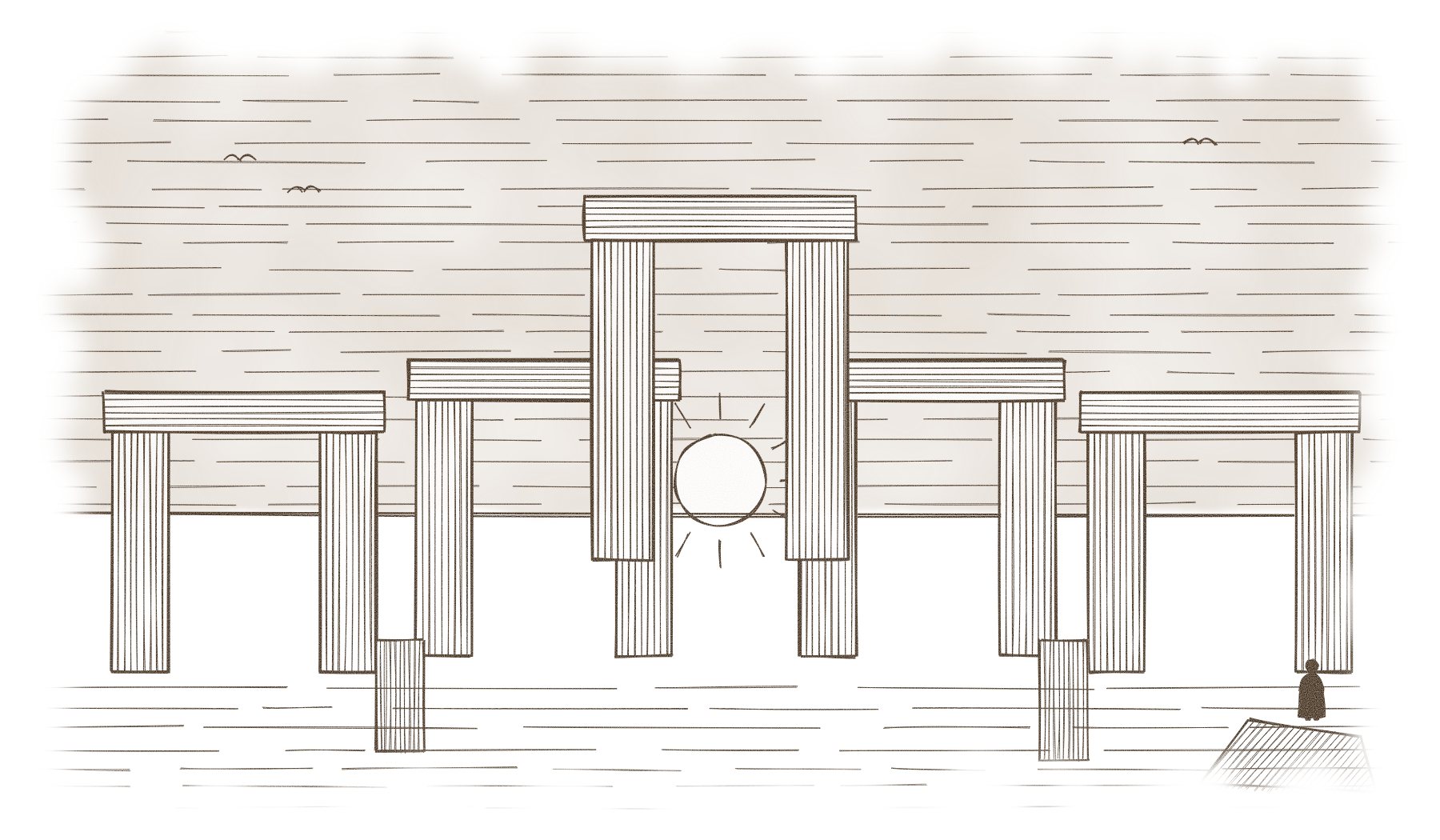
Every time you read that a city was founded "around 2500 BC" or a monument was built "about 5,000 years ago," someone, somewhere, did the hard work of figuring that out. Nobody left a convenient date stamped on Stonehenge.
So how do archaeologists actually know how old things are? The answer is a toolkit of clever methods — some simple, some extraordinary — that usually work best in combination. Here's a plain-English guide to the main ones.
1. Layers: the oldest trick in the book
The simplest idea in archaeology is also one of the most important. When things pile up over time, the older stuff is usually at the bottom and the newer stuff on top. Think of a laundry basket. That's called stratigraphy — reading the layers.
At a site like Troy, in Turkey, people built new settlements on top of old ones for thousands of years, creating a mound of layers. Archaeologists number them from the bottom up. Stratigraphy doesn't give you dates in years, but it tells you the order things happened. That's called relative dating: this is older than that.
It's not foolproof. Animals burrow, people dig pits, rivers rearrange things. But a careful excavator learns to spot those disturbances.
2. Pottery and style
Fashions change, and they've always changed. Pottery shapes, decorations and techniques shift over time in ways archaeologists have studied in enormous detail. If you know the sequence of pottery styles in a region, finding a particular kind of broken pot in a layer can tell you roughly when that layer formed.
This sounds unglamorous, and it is. But broken pottery — "sherds" — is one of the most common finds on ancient sites, because pots break constantly and the pieces almost never rot. A lot of ancient history has been pieced together from the rubbish people threw away.
3. Radiocarbon dating
This is the big one. In the late 1940s, the American chemist Willard Libby developed a way to date things that were once alive — wood, bone, seeds, charcoal, cloth, leather. He won the Nobel Prize in Chemistry for it in 1960.
Here's the idea, simplified. All living things take in carbon while they're alive, including a tiny amount of a radioactive form called carbon-14. When they die, they stop taking it in, and the carbon-14 they contain slowly decays at a known rate. Its half-life is roughly 5,730 years — meaning after about 5,730 years, half of it is gone; after another 5,730, half of what's left; and so on.
Measure how much carbon-14 is left in a sample, and you can work out roughly how long ago it died.
A few important catches:
- It only works on things that were alive. You can't radiocarbon-date a stone. You date the charcoal from a fire next to it, or a bone buried with it.
- It needs calibration. The amount of carbon-14 in the atmosphere hasn't been perfectly constant over time, so raw results are adjusted using calibration curves built from things of known age — especially tree rings.
- It has limits. Beyond about 50,000 years, there's too little carbon-14 left to measure reliably.
- It dates the death, not the use. A beam cut from an old tree, or reused in a later building, can give a date older than the building itself.
Radiocarbon has transformed archaeology. It's how we know Göbekli Tepe in Turkey dates to around 9500 BC, and how the vellum of the mysterious Voynich Manuscript was dated to the early fifteenth century.
4. Tree rings
Trees add a ring every year, and the width of each ring depends on the conditions that year — wide in good years, narrow in dry or cold ones. Over centuries, that creates a unique pattern, a bit like a barcode.
Dendrochronology — tree-ring dating — works by matching the ring pattern in a piece of old wood against a master sequence built up from living trees, old timbers and preserved wood. If the pattern matches, you can sometimes date the wood to the exact year the tree was cut down. Not "about 1200." 1203.
That's how archaeologists dated the great cliff dwellings at Mesa Verde in Colorado so precisely, and tree rings are also used to calibrate radiocarbon dates. It does need the right kind of wood from a region with a well-established sequence, so it can't be used everywhere.
5. Writing, coins and historical records
When a society left writing, things can get much more precise. An inscription naming a king, a coin with a ruler's portrait, a dated letter — all give fixed points.
A stone found in York in 1854 names the Ninth Legion and the Emperor Trajan, which lets historians date it to around AD 107–108. Coins are especially useful because they often carry the name of the ruler who issued them, giving a "not earlier than" date for the layer they're found in.
But records can be wrong, or biased, or written long after the fact. Historians treat them as evidence to weigh, not as gospel.
6. Newer tools
Archaeology keeps adding methods. A few others you might hear about:
- Thermoluminescence can date when pottery or burnt flint was last heated.
- Ancient DNA can reveal relationships between people, migrations, and even identify individuals — as when DNA helped confirm the remains of King Richard III, found under a car park in Leicester in 2012.
- Lidar, a laser-scanning technology, can map ruins hidden under forest, as it did dramatically at Angkor in Cambodia — though that's about finding sites rather than dating them.
Why dates keep changing
You'll sometimes see a date for an ancient site change — "earlier than previously thought!" That's not science failing. It's science working. New samples, better calibration and new methods refine the picture. A good archaeological date usually comes with a range, not a single number, and an honest researcher will tell you how confident they are.
The real answer
Most of the time, archaeologists don't rely on one method. They combine layers, pottery, radiocarbon, tree rings and written evidence, and look for where the different lines agree. When they all point to the same window, you can be fairly confident. When they disagree, that's when it gets interesting.
It's detective work, really. Patient, careful, sometimes boring, occasionally thrilling detective work — and it's the reason we know anything at all about most of the human past.
If this kind of thing fascinates you, Lost Cities and Echoes in Stone tell the stories of ancient places and monuments — and how we worked out when, and how, they were made.
- #history
- #archaeology
- #radiocarbon dating
- #science