Why Do Cities Disappear? What the Ruins Tell Us
Some lost cities ended in a single day. Most faded slowly. Looking across thousands of years of ruins, the same causes keep appearing: water and climate, shifting trade, worn-out land, war and disease.
By Alexander Rahman · · 5 min read
It's almost impossible to stand in a busy city and imagine it empty. The traffic, the noise, the crowds, the shops — it all feels permanent. Like it's always been here and always will be.
The people who lived in ancient cities felt exactly the same. And the ground of the world is full of their cities: places that were once enormous, important, crowded, and are now ruins, mounds, or nothing at all.
So why do cities die? Looking at lost cities across thousands of years, the same handful of reasons come up again and again. They're worth knowing. Some of them haven't gone anywhere.
Sometimes it's sudden
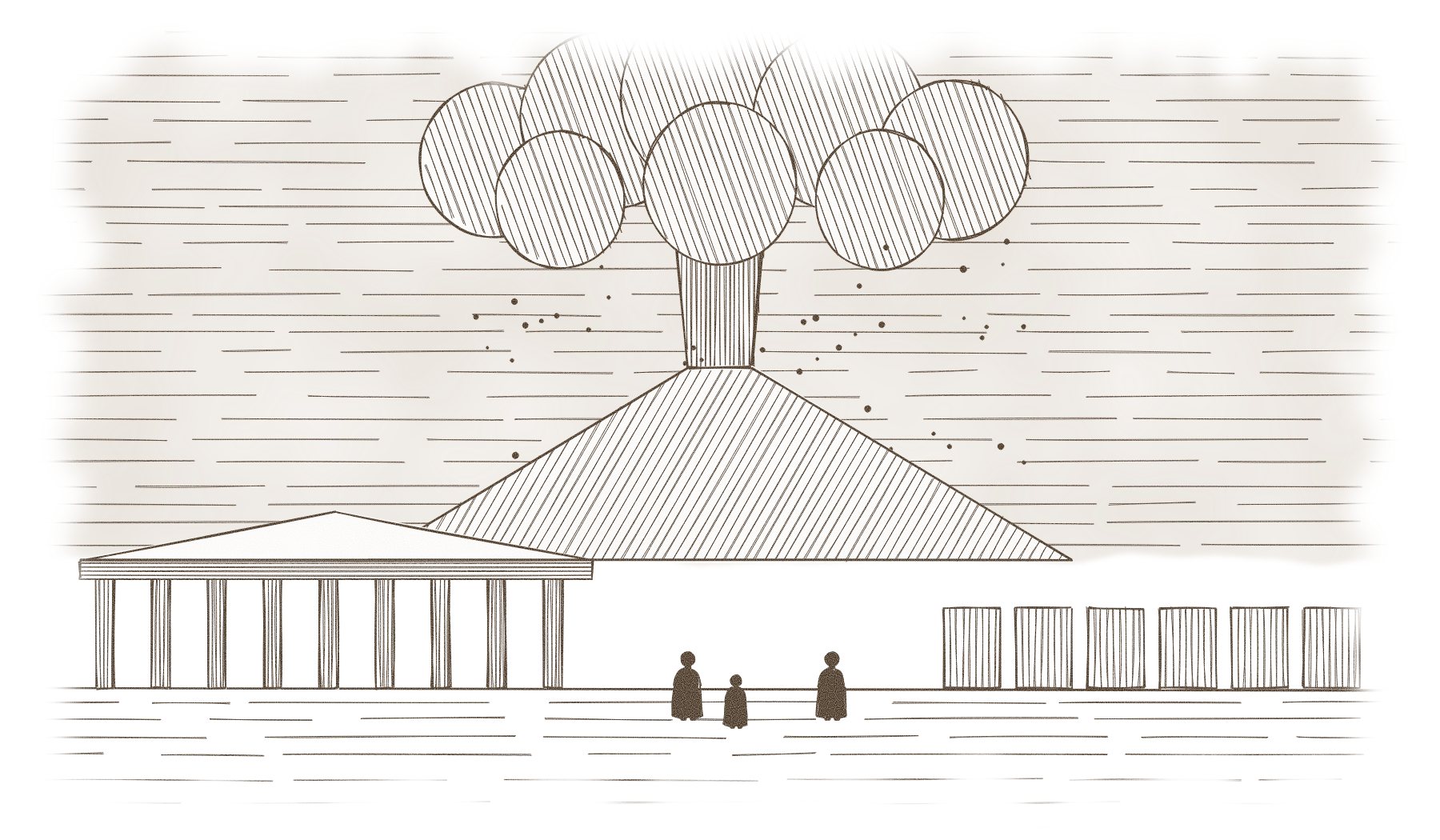
A few cities really did end in a single day. The most famous are Pompeii and Herculaneum, on the Bay of Naples, buried by the eruption of Mount Vesuvius in AD 79. The Roman writer Pliny the Younger, who watched the eruption from across the bay as a teenager, described the great column of ash rising like an umbrella pine.
Others were destroyed by war. Nineveh, the capital of the Assyrian Empire in what's now Iraq, was sacked and burned by an alliance of enemies in 612 BC. The capital of the Vijayanagara Empire in southern India was plundered after a single disastrous battle in 1565.
These are the stories that grab our attention, because they're dramatic. But they're the exception, not the rule.
Usually, it's slow
Most lost cities didn't fall. They faded.
People drifted away over generations. Fewer new houses got built. Temples weren't repaired. Then one day, nobody really lived there anymore — and nobody could have told you exactly when it happened.
The great cities of the Indus Valley, like Mohenjo-daro in today's Pakistan, declined over a long period from around 1900 BC. The cliff dwellings of Mesa Verde in Colorado were left within a few generations around AD 1300. Cahokia, the great city near today's St. Louis, emptied out over a century or more. No single catastrophe. Just a slow loosening of whatever held people there.
I find the slow fade more unsettling than the volcano, honestly. You can see a volcano coming.
The common causes
Water and climate
This one comes up more than any other. Cities need reliable water and food, and when rainfall changes or rivers move, even brilliant engineering can be overwhelmed.
At Mesa Verde, tree rings record a severe drought from around 1276 to 1299 — more than twenty years of it. At Angkor in Cambodia, studies of tree rings suggest periods of severe drought alternating with intense monsoons in the fourteenth and fifteenth centuries, which may have strained the city's vast system of canals and reservoirs. In the Indus Valley, evidence points to weakening monsoon rains and shifting rivers.
Trade moving elsewhere
Cities are knots in a network. When the network changes, a city can find itself left behind.
Petra, in Jordan, grew rich as a stop on caravan routes carrying incense and spices. When more of that trade started going by sea instead, Petra slowly lost its reason for being. Great Zimbabwe's wealth depended on gold trade with the coast; when those routes shifted, so did power in the region.
Using up the land
A big population in one place needs a lot: wood for fuel and building, soil for farming, grazing for animals. Over centuries, those can run down. Some archaeologists think this played a part at Cahokia and Great Zimbabwe — though it's usually one factor among several rather than the whole story.
War and broken politics
Sometimes the institutions that hold a city together break. At Teotihuacan in Mexico, the major buildings at the city's center were burned and their sculptures smashed around AD 550 — possibly by an internal revolt. After that, the city never recovered its greatness.
Disease
Epidemics can empty cities quickly. The diseases that spread through the Americas after European contact contributed to the collapse of the Inca state — which is part of why Machu Picchu, a royal estate, was abandoned.
It's almost never just one thing
This is the big lesson, if there is one. Cities rarely die of a single cause. They die of several at once — a drought on top of a trade slump on top of political trouble — each making the others worse. None of them would have been fatal by itself. Together, they are.
That's also why historians argue so much about "the" reason a city fell. Often the honest answer is: there wasn't one.
Were they really "lost"?
One more thing worth saying. A lot of famous "lost cities" were never lost to the people who lived nearby. Local farmers were growing crops on the terraces of Machu Picchu when Hiram Bingham arrived in 1911. Monks never stopped worshipping at Angkor Wat. The Bedouin knew Petra perfectly well.
What was lost was the outside world's knowledge of them. When we say a city was "rediscovered," we usually mean rediscovered by scholars — often with help from local people whose names were left out of the famous accounts.
What it means for us
It's tempting to think modern cities are immune to all this. We have technology, global trade, modern medicine. And we're certainly better equipped than any ancient city.
But look at the list again: changing climate, droughts and floods, shifting trade, strained resources, disease, conflict. None of those are ancient problems. They're on the news this week.
I don't say that to be gloomy. If anything, I find it oddly hopeful. The cities that lasted longest seem to have been the ones that could adapt — that looked after their water and land, stayed connected to the wider world, and changed when circumstances changed. That's a lesson anyone can use.
Every silent ruin was once full of noise. Someone, on an ordinary morning thousands of years ago, swept a doorstep you can still walk across today. That's worth remembering.
Lost Cities tells the stories of fifteen of these places — from Çatalhöyük to Machu Picchu — and what we've learned from their rise and fall.
- #history
- #lost cities
- #archaeology
- #climate